
See also: Best Carry-On Packing List for a Week in Mexico or Hawaii. See also: Best Time to Visit Banff 2026: Season-by-Season Guide. See also: Dominican Republic Family Resorts for Canadians in 2026: Punta Cana vs Puerto Plata vs Samana.
AI-narrated version of this post using a synthetic voice. Great for accessibility or listening while busy.
Affiliate disclosure: NorthMarkets participates in affiliate programs including the Amazon Associates program. We may earn a commission on qualifying purchases made through our links, at no additional cost to you. Product availability and pricing change regularly — always confirm current details on the retailer’s page before buying. See our Disclaimer for full details.
Quinta Avenida gets all the attention in Playa del Carmen shopping guides, and it is easy to see why — five kilometers of pedestrian street lined wall-to-wall with shops is hard to ignore. But treating Quinta Avenida as the whole shopping story of the Riviera Maya means missing most of what is actually worth buying. Between Mercado 28 a few blocks off the tourist strip, the artisan markets scattered through Tulum, and day-trip options like Puerto Morelos, there is genuine Yucatán craft work here — hand-woven hammocks, hand-embroidered textiles, and real silver jewelry — sitting right alongside the imported souvenirs. Here’s how to tell the difference and where to actually go.
Quinta Avenida: what it’s good for and what it isn’t
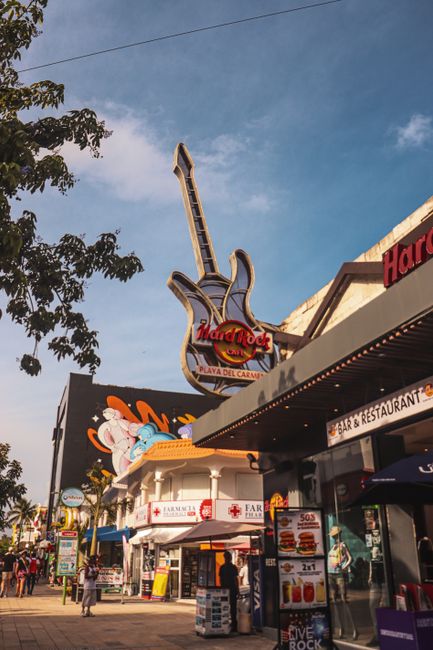
Quinta Avenida (Fifth Avenue) is Playa del Carmen’s main pedestrian corridor, running roughly parallel to the beach through the heart of downtown. It is genuinely worth a stroll for the atmosphere — restaurants, bars, street performers, art galleries — but the retail mix skews heavily toward mass-produced trinkets, printed t-shirts, and imported souvenirs aimed squarely at the cruise-ship and resort crowd. That said, it is not without real finds: a number of small jewelry boutiques along the street specialize in handmade Mexican silver, and some of the galleries carry legitimate Mayan-influenced textile and craft work at gallery prices. The trick on Quinta is knowing which storefronts are selling the same imported stock as every other shop on the strip and which ones are actually sourcing from local artisans — asking directly where a piece was made is a fair question and a good filter.
Mercado 28: the real craft market
A short walk inland from the beach, Mercado 28 is where Playa del Carmen’s actual handicraft market lives. It’s a dense warren of stalls selling textiles, hand-painted ceramics, leather goods, silver jewelry, and art pieces, and unlike much of Quinta Avenida, bargaining is the norm here — vendors expect it and often build room into their opening price. This is also the best spot in Playa del Carmen for a genuine Yucatán hammock: look for hand-woven cotton or nylon construction rather than the thinner, machine-made versions, and check the tightness and evenness of the weave before buying. Hammock shops along Avenida 30 offer a similar selection if you want to compare prices before committing.
Tulum Pueblo vs. the beach zone: two different shopping trips
Tulum’s shopping splits cleanly into two zones with very different characters, and it’s worth knowing which one you’re in before you start browsing. Tulum Pueblo — the inland town center, not the beach — is where locals actually shop, with family-run storefronts lining Avenida Tulum and the surrounding streets. Prices here are noticeably friendlier than along the coast, and it’s the better base for genuine artisan finds: hand-embroidered textiles, ceramics, and small workshops where you can sometimes watch a piece being made. The La Veleta neighborhood, just west of the main avenue, has developed its own cluster of independent boutiques carrying a similar mix at similarly reasonable prices.
The beach zone — the hotel strip running along the coast road south of the ruins — is a different proposition entirely. Boutiques here lean into resort and boho-chic styling: swimwear, linen clothing, statement jewelry, and design-forward home goods, often at prices that reflect the beachfront rent as much as the craftsmanship. It’s worth a look if that aesthetic is what you’re after, but it’s not the place to expect bargains or a deep well of traditional Maya craft work. Vendors also set up under palapa-roofed stalls along the beach road on a rotating basis, which is worth a browse if you’re already out that way, though the selection changes day to day.
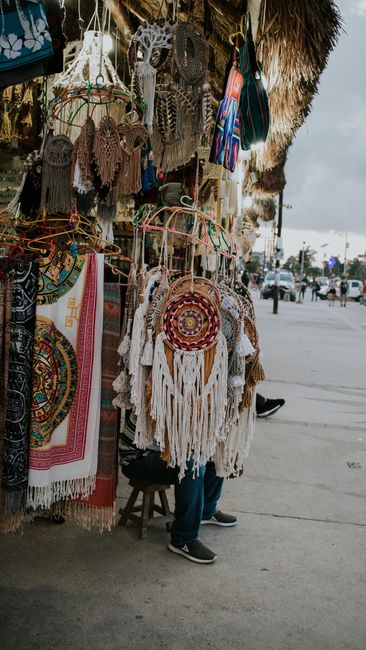
Photo by Amar Preciado on Pexels
Tulum’s artisan markets
Tulum has developed its own, smaller-scale craft shopping scene distinct from Playa del Carmen’s. In Tulum Centro, the Local Tulum Market is the place for budget-friendly, genuinely local shopping — handmade crafts, fresh produce, and souvenirs made by area vendors rather than imported. Centro Artesanal Tulum, an indoor market, leans more toward textile work and contemporary craft pieces, a step up in presentation from the outdoor stalls.
For a more curated stop, Mixik Arte Popular Mexicano in Tulum Centro (Avenida Tulum, Manzana 6, Lote 22) is a boutique rather than a market, but it’s worth building into the same walk. It specializes in Mexican folk art — textiles, hand-painted ceramics, artisanal jewelry, blown glass, and Huichol beadwork — sourced from makers around the country rather than mass-produced stock, and staff are generally happy to talk through where a given piece came from. It’s typically open Monday through Saturday from around 10 a.m. to 8 p.m., and Sunday from 10 a.m. to 5 p.m., though it’s worth confirming hours before making a special trip.
If your visit lines up with a weekend, Mercado Donóve on Calle Sol Oriente has run since 2018 as a Saturday-and-Sunday gathering of upward of 80 vendors, with a noticeably different focus from the daily craft stalls — organic skincare, upcycled and small-batch clothing, and a general eco-conscious bent that fits Tulum’s broader identity. It leans less toward traditional Maya textile work and more toward the newer wave of independent makers who’ve set up shop in town, but it’s a good complement to the more traditional markets if you’re spending a full weekend in the area.
If your visit lines up with the calendar, two recurring markets are worth planning around: the Aldea Farmers Market on the Coba Road heading toward the beach, held the first Sunday of the month, and Parque La Ceiba’s market in Playa del Carmen, held the third Saturday of each month. Both mix produce, prepared food, and handmade goods from local makers, and both have a noticeably different feel from the daily tourist-facing markets — more local shoppers, more one-off small-batch sellers, fewer identical stalls selling the same imported stock.
Day trip: Puerto Morelos
If you have a rental car or are willing to take a taxi, Puerto Morelos, between Cancún and Playa del Carmen, has its own Artisan & Craft Market that draws far fewer tourists than either Playa del Carmen or Tulum. It’s one of the better spots in the region for original artwork — paintings and decorative pieces alongside functional items like woven baskets, clothing, and blankets. Because it sees less cruise-ship and resort traffic, prices tend to run a bit lower and vendors are often more willing to talk about their work.
The Maya hammock and textile tradition behind the crafts
The hammocks sold across these markets aren’t a tourist-era invention — hammock weaving in this region traces back roughly a thousand years to the ancient Maya, who wove agave fiber into cord, mats, and textiles long before that. The traditional material is henequen, a fiber from the agave fourcroydes plant native to the Yucatán Peninsula, which the Maya called ki or jeniquén — the word Spanish colonizers eventually adapted into “henequen.” In the 19th century, global demand for durable binder twine turned henequen into Yucatán’s “green gold,” and the region became the world’s leading fiber exporter for decades before synthetic materials displaced it commercially.
That industrial boom has largely faded, but the weaving tradition survives in smaller-scale artisanal form — which is exactly what you’re buying when you pick up a hammock at Mercado 28 or one of Tulum’s markets. Most hammocks sold today use cotton or nylon rather than henequen, which keeps them lighter and less expensive; the highest-quality henequen-fiber hammocks are a specialty item in their own right and priced accordingly higher. Either way, the weaving technique — a continuous, hand-worked mesh rather than a machine-loomed sheet — is the same skill passed down through generations of Yucatán weavers, and it’s worth asking a vendor about the material and construction before you buy, since the difference shows up in comfort as much as price.

Photo by Manoo Media on Pexels
Genuine handmade vs. imported: what to look for
The single biggest tell across all of these markets is the hammock and textile category, since it’s the easiest for imported goods to hide among genuine Yucatán craft. A hand-woven cotton hammock has visible, slightly irregular knotting at the ends and a dense, even weave through the body; mass-produced versions often use thinner synthetic cord with a looser, more uniform weave that feels slick rather than woven. For embroidered textiles, check the reverse side of the fabric — hand embroidery shows thread texture and small variations on the back, while machine embroidery looks identical front and back. For silver, look for a stamped purity mark (.925) rather than taking a vendor’s word for it. Hand-painted ceramics are the other category worth a close look: genuine pieces show small brushstroke variations and slightly uneven glaze pooling, while mass-produced ceramics tend to have a perfectly uniform printed pattern with no texture under the glaze.
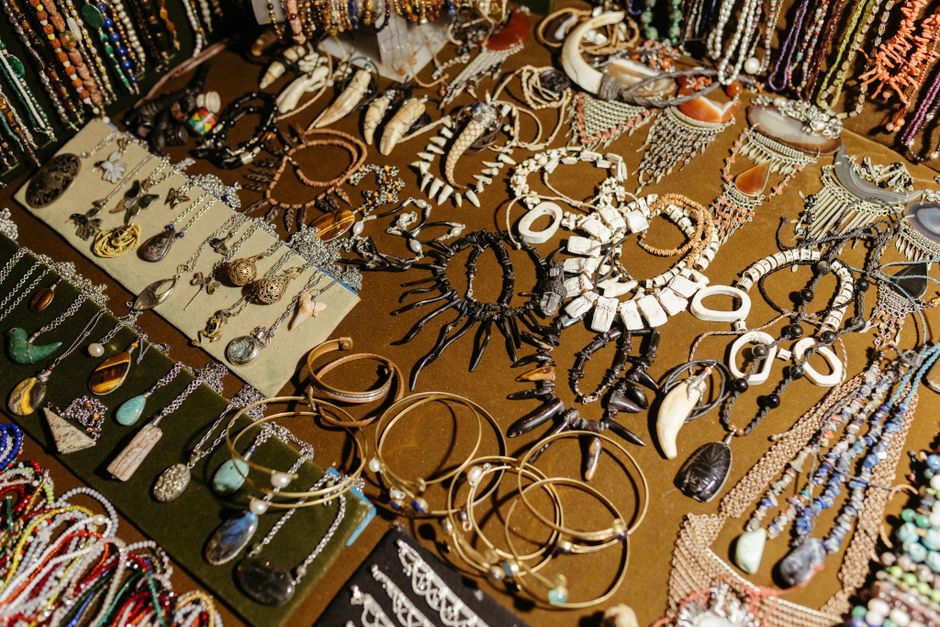
Photo by Jonathan Borba on Pexels
Bargaining, cash vs. card, and getting there
Bargaining is expected at Mercado 28, the Tulum markets, and most open-air stalls, but not at the fixed-price boutiques and galleries along Quinta Avenida. Cash, in pesos, is the most useful currency at markets and gets you better effective prices than paying in US dollars, since vendors quoting in USD tend to round in their own favor. Playa del Carmen’s markets are walkable from most downtown hotels; getting to Tulum from Playa del Carmen takes roughly an hour by ADO bus or collectivo (shared van), both inexpensive and straightforward options that run frequently along the coastal highway.
The two towns sit about 61 kilometers (38 miles) apart along Highway 307, and neither the ADO bus nor the collectivo requires advance booking for a same-day trip. Collectivos run the route in roughly 50 minutes for somewhere around $2–3 USD per person, leaving whenever they fill up rather than on a fixed schedule; ADO buses take about an hour, cost roughly $3–5 USD depending on the service class, and run on a set timetable with air conditioning and more comfortable seating. Both drop you within walking distance of central Tulum and central Playa del Carmen, so there’s no need to arrange a taxi on either end unless you’re heading somewhere less central. Within each town, the markets themselves are compact enough to cover on foot — Mercado 28 and Quinta Avenida are a short walk from most downtown Playa del Carmen hotels, and Tulum Pueblo’s shopping streets are walkable from the town center.
Morning is generally the more comfortable time to shop at any of these markets; heat and humidity build through the afternoon, especially from late spring through summer, and vendors are often more willing to talk price earlier in the day before the heat sets in. Stalls at Mercado 28 and the Tulum markets typically open by mid-morning, around 9 or 10 a.m., and wind down in the early evening, though hours vary by vendor and it’s worth confirming locally rather than assuming a fixed schedule, particularly for smaller stalls. Basic safety practice applies here as anywhere: keep cash and cards separated, keep an eye on bags in crowded stall rows, and stick to well-trafficked walkways after dark.
Packing your finds for the trip home
Hammocks pack down surprisingly small but take up real weight, so if you’re bringing one home along with other purchases, a portable luggage scale saves you from a surprise at check-in. Silver jewelry travels best in a dedicated jewelry travel case rather than loose in a suitcase pocket, where chains tangle and softer metals can scratch against other items. If Mercado 28 or the Tulum markets turn into more of a haul than you planned for, a flat-packing collapsible duffel bag tucked into your outbound suitcase gives you a second bag for the flight home without needing to buy luggage locally.
Planning the rest of a Riviera Maya trip? Our guide to family resorts in Mexico with direct Canadian flights covers the resort side, and our travel credit card guide is worth a read before you shop, since foreign transaction fees add up fast on market purchases. If your itinerary bookends the beach with a colder-climate stop, our winter travel packing list covers the other end of the packing list.
Best time of year to visit
The Riviera Maya’s high season runs roughly December through April, when dry weather and comfortable temperatures bring the biggest crowds to Quinta Avenida and, to a lesser extent, Mercado 28 and Tulum’s markets. Late spring through summer is hotter and more humid, with a real chance of afternoon rain from June onward; hurricane season technically runs June through November, though direct hits are relatively rare and most of the season passes without major disruption. Shoulder-season months — May, and again in November before the winter crowds arrive — offer a solid trade-off of decent weather and noticeably thinner markets, which makes for easier bargaining and a more relaxed pace at Mercado 28 in particular. If you’re specifically planning around the monthly Aldea Farmers Market or Parque La Ceiba market dates mentioned above, double-check the current schedule before you book, since exact dates can shift.
Craving a taste of Mexico closer to home while you plan? Our review of Añeho, a Mexican restaurant in Banff, is a good detour while you build out the rest of the itinerary.
What to Bring for a Playa del Carmen and Tulum Shopping Trip
Between Mercado 28’s craft stalls, Tulum’s artisan markets, and time spent near the reef, a few practical items make the trip easier.
- Reef-safe sunscreen SPF 50 – mineral, reef-safe sunscreen is effectively required in and around Tulum’s cenotes and reef zones, so it’s worth bringing your own rather than buying it locally at a markup.
- 10L waterproof dry bag – keeps textiles and electronics dry if your Tulum Pueblo shopping day connects to the beach zone.
- Foldable reusable shopping tote – practical for a Mercado 28 haul or a Puerto Morelos day trip without buying a bag locally.
- UPF wide-brim sun hat – Quintana Roo sun is intense even on an overcast day of market browsing.
Frequently asked questions
Is Quinta Avenida worth visiting at all if the shopping is mostly imported goods?
Yes, for the atmosphere and the handful of genuine jewelry boutiques and galleries mixed in — just don’t expect it to be your main craft-shopping stop. Treat it as an evening stroll with occasional good finds rather than a dedicated shopping destination.
What’s the best day to visit the Tulum farmers markets?
The Aldea Farmers Market runs the first Sunday of the month on the Coba Road; Parque La Ceiba in Playa del Carmen runs the third Saturday. Mercado Donóve runs both Saturday and Sunday most weekends. All are worth timing a visit around if your schedule allows.
How do I get from Playa del Carmen to Tulum without a rental car?
ADO buses and shared collectivo vans both run regularly along Highway 307 between the two towns, take about an hour or a bit less, and are inexpensive, reliable options that don’t require driving.
How far is it between Playa del Carmen and Tulum, and how long does it take?
The two towns are about 61 kilometers (38 miles) apart along Highway 307. A collectivo takes roughly 50 minutes, and an ADO bus takes about an hour; both are inexpensive and run frequently through the day.
Should I buy a hammock in Playa del Carmen or wait for Mercado 28?
Mercado 28 generally has better selection and pricing on hammocks than the shops directly on Quinta Avenida, since it’s less geared toward walk-by tourist traffic. Compare a few stalls before deciding.
Is bargaining considered rude in these markets?
No — it’s a normal, expected part of shopping at open-air markets like Mercado 28 and the Tulum craft markets. Keep it friendly and respectful, and don’t push too hard on already-modest prices.
The bottom line
Quinta Avenida is worth the walk, but the real Yucatán craft shopping in this region happens at Mercado 28, Tulum Pueblo’s local markets, and day trips out to Puerto Morelos. Bring cash, expect to bargain gently, and check the details — weave, stitching, stamped silver marks — that separate genuine handmade work from the imported stock filling the tourist-strip storefronts.
More Shopping Guides
Packing to bring purchases home? See the travel shopping packing checklist.